

Call us: 717-283-9728
Short answer: Vacuum more often than feels necessary with a HEPA filter, use a rubber squeegee or damp rubber glove on upholstery to lift hair a vacuum cannot, treat odour at the source with enzymes rather than masking it, and wash bedding weekly.
Hair is a mechanical problem
Pet hair weaves into fabric rather than sitting on it, which is why vacuuming upholstery removes the loose top layer and leaves the rest. What actually works is mechanical: a rubber squeegee dragged across the fabric, or a damp rubber glove wiped over it. Both grip the woven-in hair and roll it up. It is startling how much comes out of a sofa that was just vacuumed.
Get the filtration right
A vacuum without a sealed HEPA system collects hair and blows dander straight back into the room through the exhaust. Dander is the actual allergen — not hair — and it is fine enough to stay airborne for hours. If anyone in the house has allergies, sealed filtration matters more than suction power.
Why odour comes back
Because the source is below the surface. Accidents pass through carpet into the underlay, and through upholstery into the foam. Surface cleaning removes what is on top; the residue underneath re-humidifies and the smell returns within days. It needs an enzyme treatment applied into the material rather than misted over it, and enough drying time afterwards.
Never use ammonia-based cleaners on accidents
Urine contains ammonia. Cleaning with an ammonia-based product leaves a smell the animal reads as a marked spot, which encourages repeat accidents in the same place. This is a genuinely common and self-defeating mistake.
The places pet hair collects that people miss
Along skirtings, where airflow deposits it. Under and behind furniture. In the crevices of upholstery, and under removable cushions. Air vents and returns. The edges of stair treads. Inside the vacuum itself, which needs emptying far more often in a pet household — a full canister loses suction long before it looks full.
Products and safety
Avoid phenols and pine oil, which are toxic to cats, and be careful with concentrated essential oils around both cats and birds. Bleach is not safe around animals in the concentrations people typically use it. Rinse floors after cleaning — whatever is on the floor ends up on paws and then gets licked off. Tell your cleaner what animals you have and they should adjust accordingly.
Realistic frequency
A household with a shedding dog needs vacuuming two or three times a week, not weekly, and bedding — theirs and yours — washed weekly. This is the single biggest lever on both hair and allergens, and it is the one people most often stretch.
Frequently asked questions
What removes pet hair from a sofa?
A rubber squeegee or a damp rubber glove dragged across the fabric. Both lift woven-in hair that a vacuum cannot.
Why does my house still smell of dog?
Almost always soft furnishings and carpet underlay holding residue below the surface, plus the animal’s own bedding. Surface cleaning does not reach any of it.
Are your cleaning products safe for pets?
Yes, and we adjust further if you ask. Tell us what animals you have when you book.
How often should I vacuum with a shedding dog?
Two to three times a week realistically, with sealed HEPA filtration if anyone has allergies.
See the work behind the advice
Job walkthroughs with photographs from real cleans across Lancaster County.
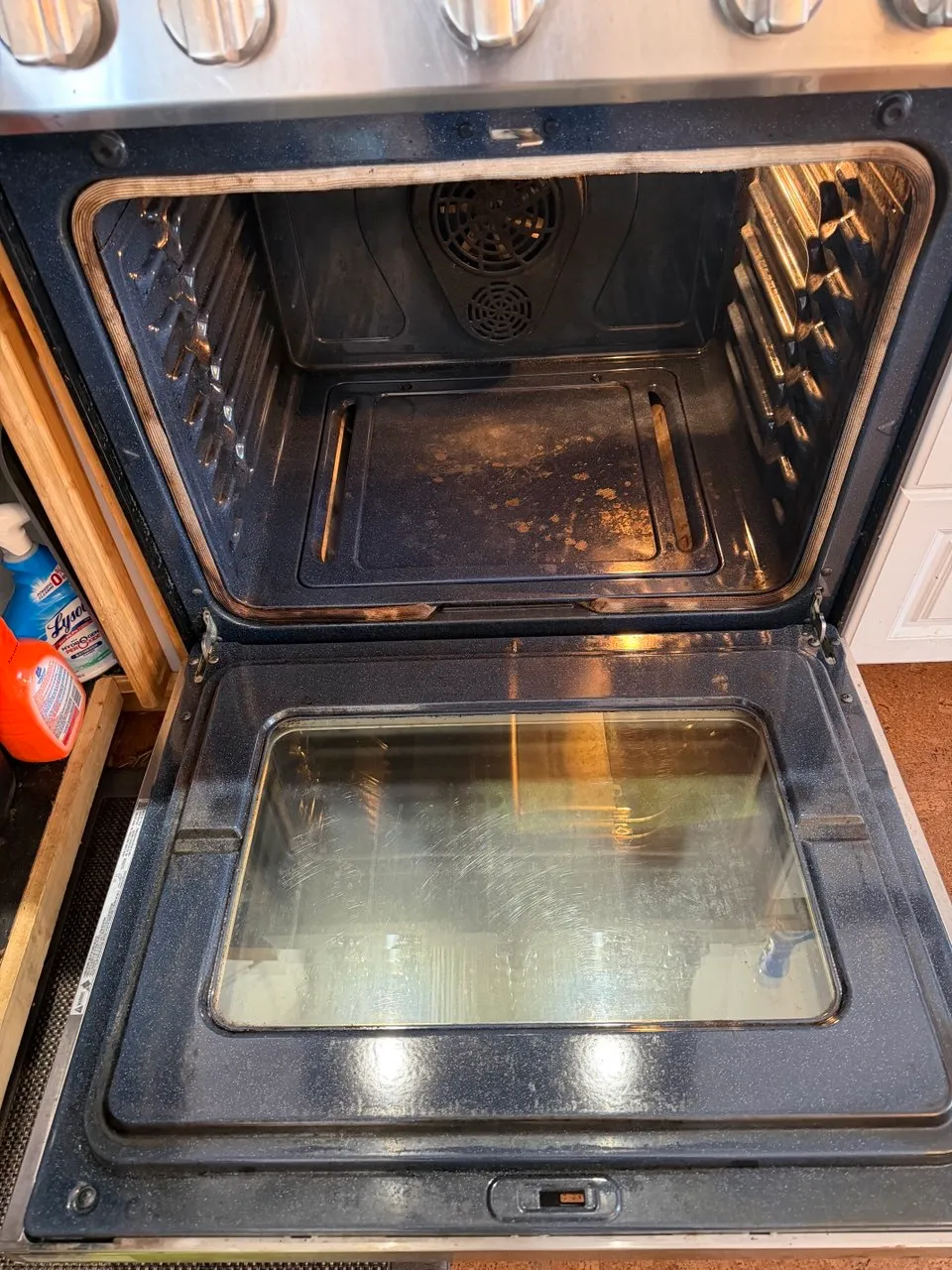 Oven deep cleaningCarbonised spillage and a brown film on the door glass — and what a proper job removes.Read the walkthrough →
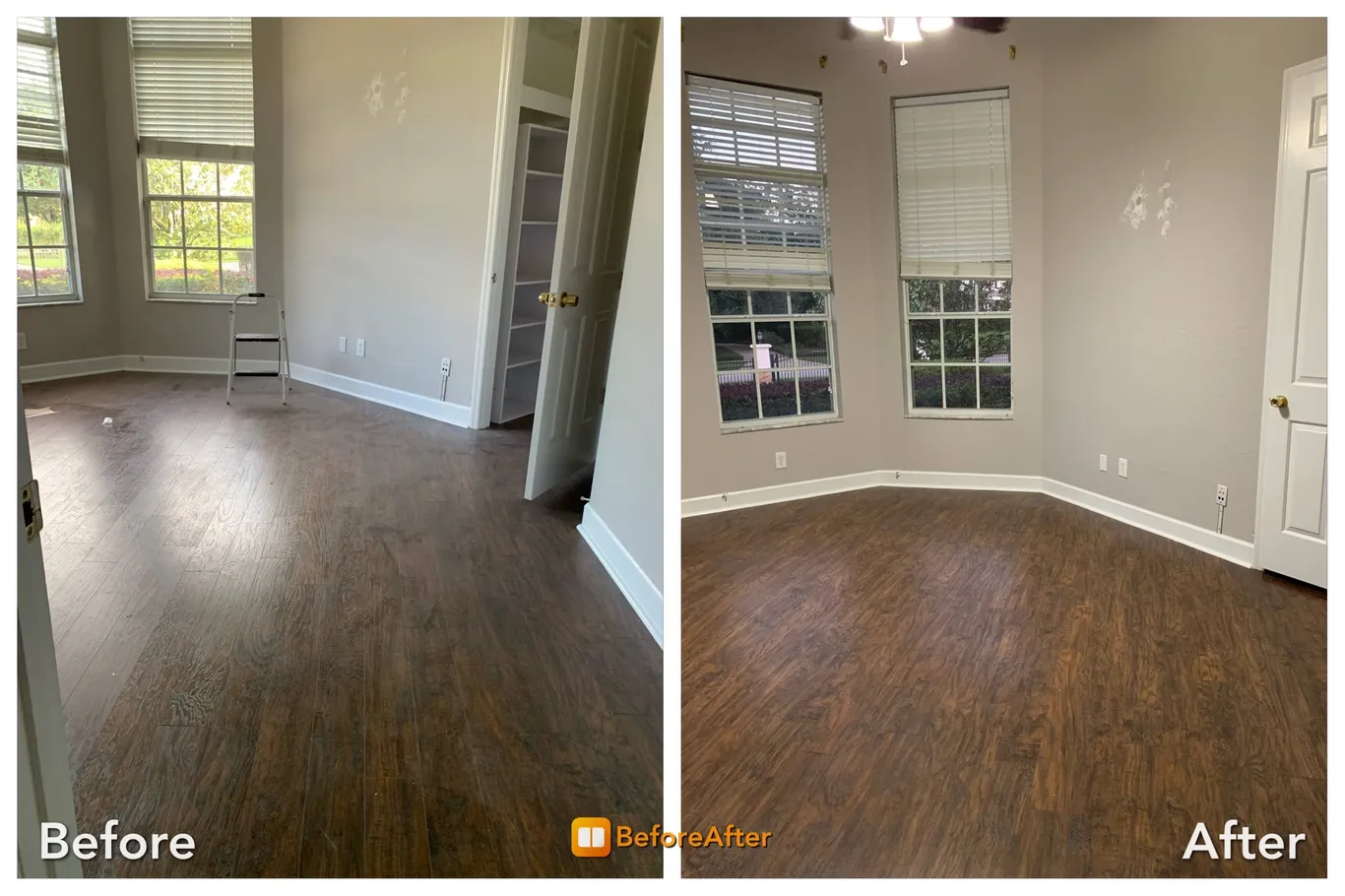 Move-out clean, empty houseWith the furniture gone nothing hides. The five items landlords actually inspect.Read the walkthrough →
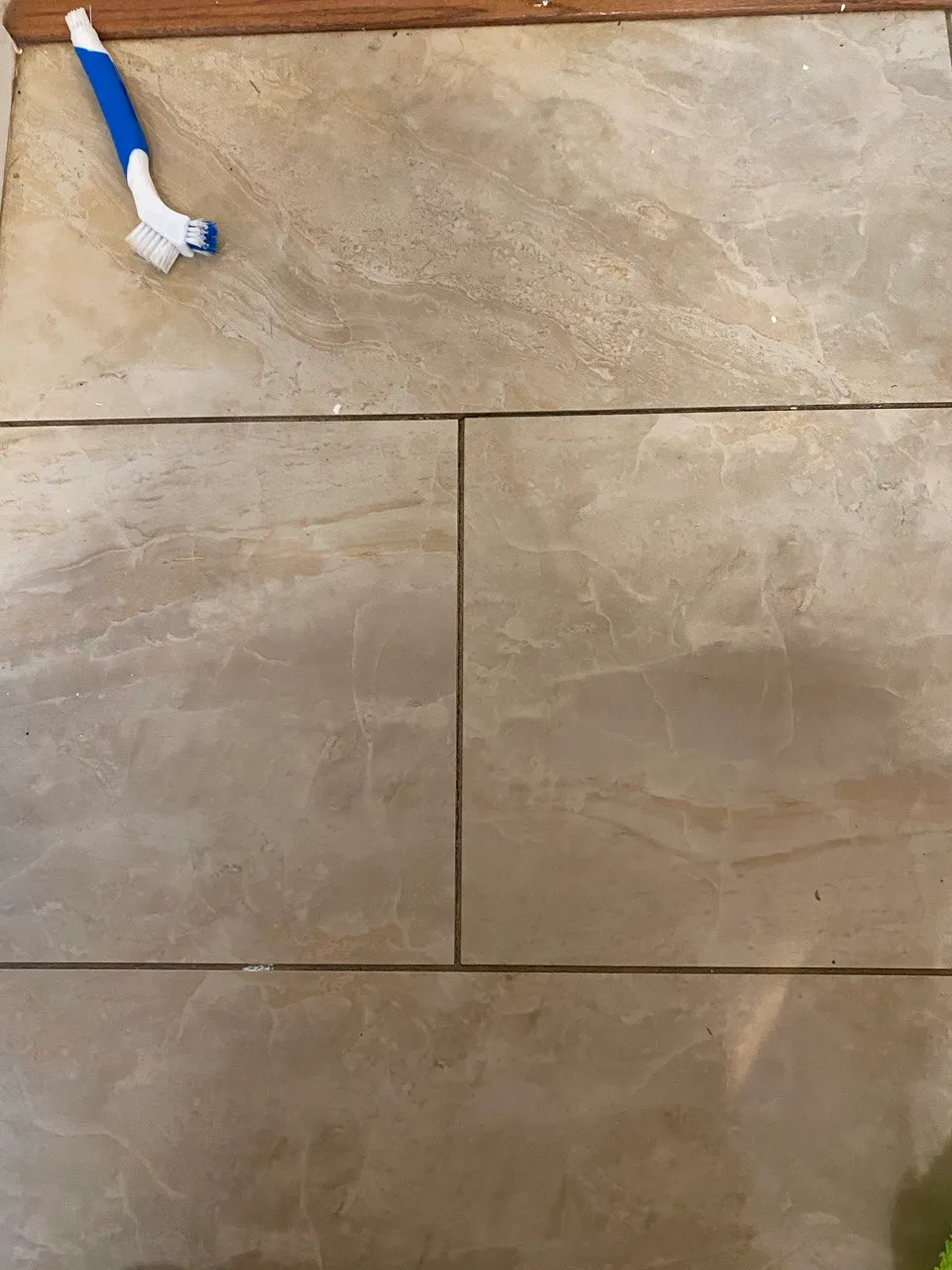 Tile and grout floorsWhy a tile floor looks grubby when the tiles are clean, and why mopping makes it worse.Read the walkthrough →
Related reading
Cleaning in Lancaster County?
Tanya answers every enquiry personally, usually the same day. Fixed quotes, agreed before any work starts.